
From Hair To Heirloom
How 3RD/DIADEM quietly became eyewear
For most of my career, my work disappeared in the shower.
For 25 years I was a hairstylist. I built architectures on the head for fashion shows, magazines and campaigns. We would spend hours cutting, shaping and refining. Then the model went home, washed their hair, and the work was gone.
In 2016 I tried to make something that stayed. I built a metal head dress, a kind of frame that extended the hairstyle. It was heavy and impractical, but it flipped a switch. I realised I did not only want to style hair. I wanted to make objects that live with people.
From titanium comb to a new material
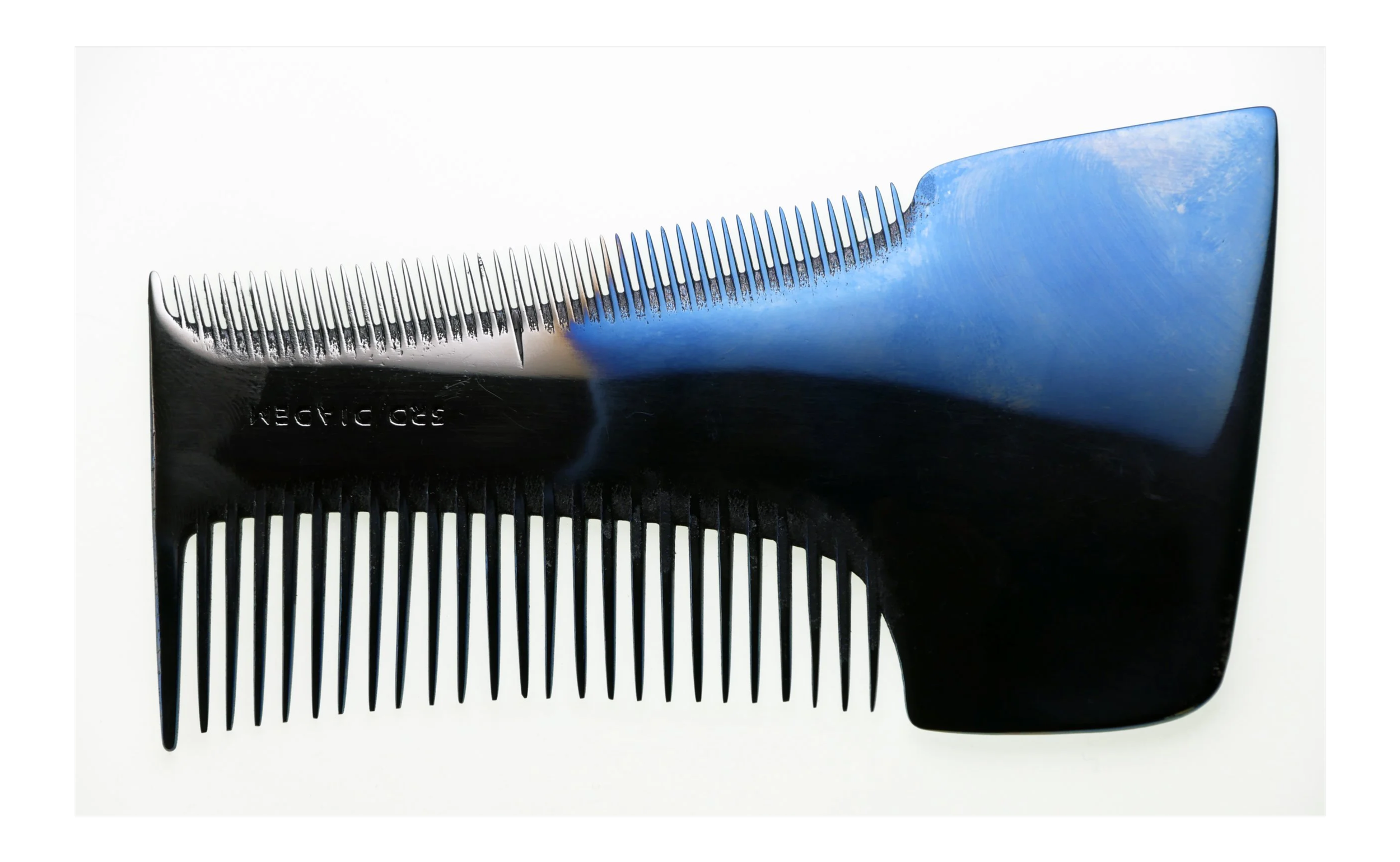
The first serious idea was a titanium comb. I imagined a precise, almost surgical tool that would last a lifetime.
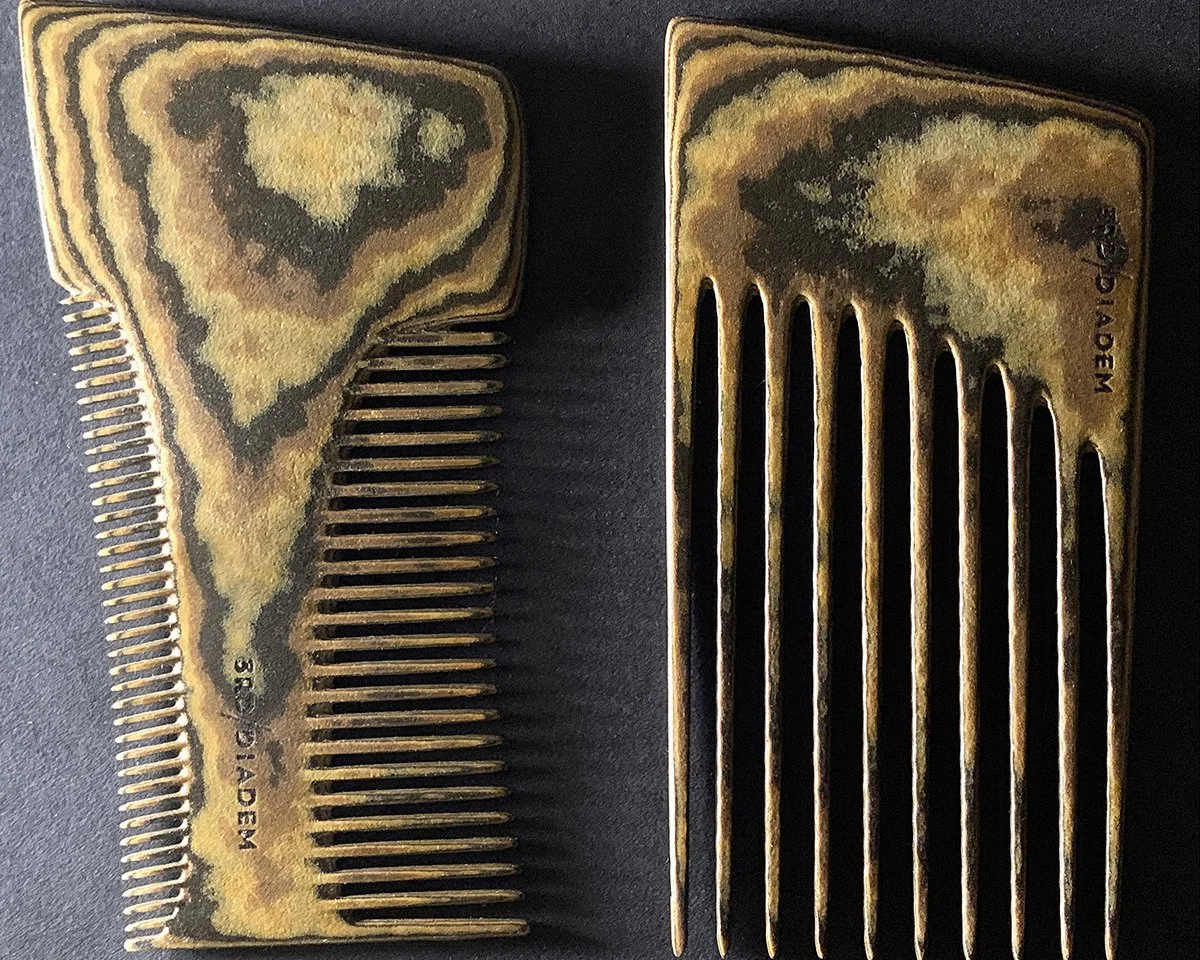
While I was researching, I started experimenting with a dense compressed paper composite. On paper it sounded fragile. In my hands it felt closer to stone or very tight-grained wood. I tested it on tableware: trays and plates where I could carve fine lines into the surface.
As I cut and sanded, a familiar image appeared. The layers of the material created patterns like raked soil in a Japanese garden. Calm, directional, controlled. That texture became a quiet language in my work.
The titanium comb idea slowly gave way to this new material. It had warmth, weight and the ability to change beautifully with use. I began making combs from it instead. That was the first seed of what would become 3RD/DIADEM.
Learning what “sustainable” really is
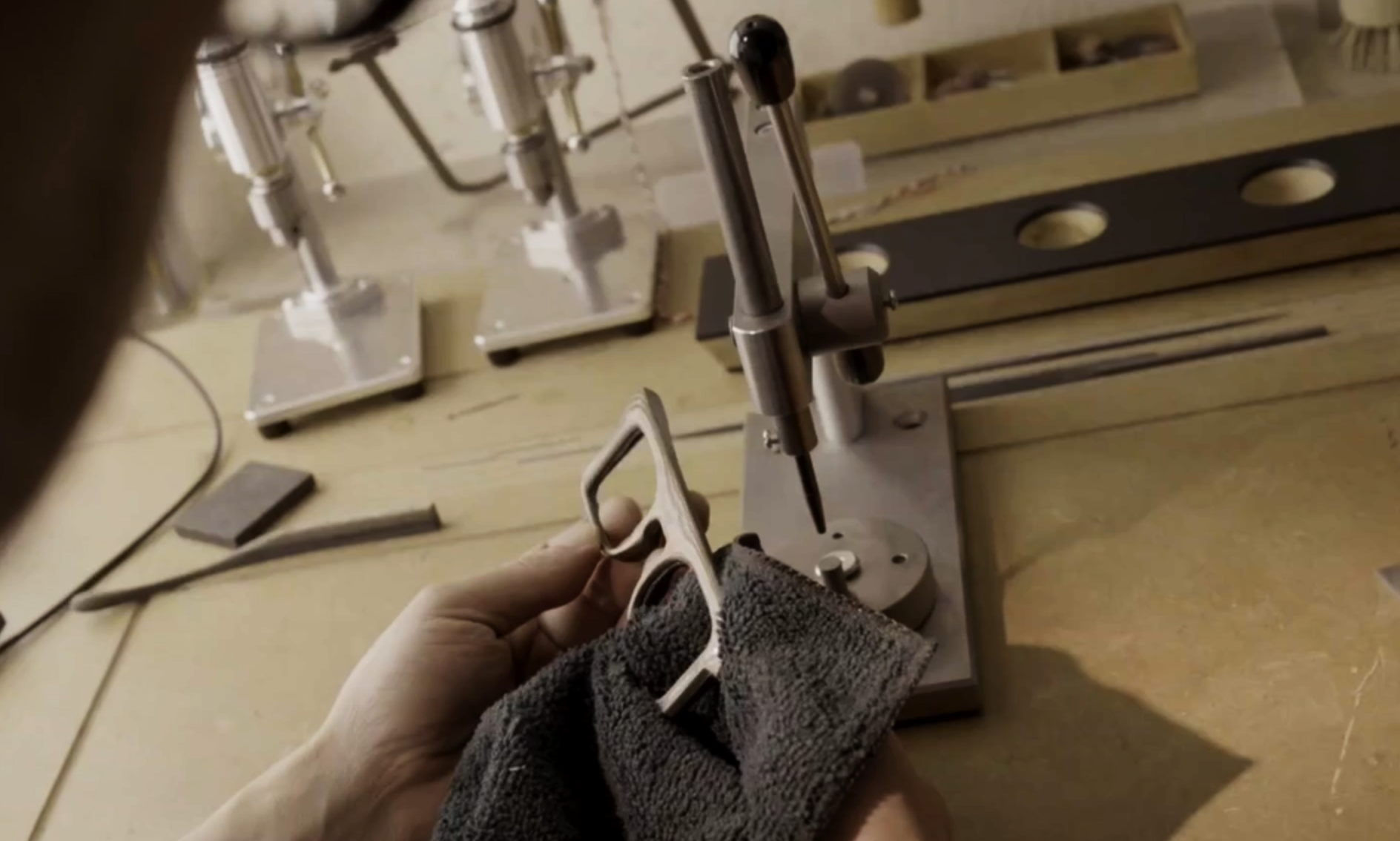
In 2020 I launched 3RD/DIADEM as a focused practice around this material: combs, small objects, jewellery, incense burners. Everything was cut, shaped and finished in my London workshop.
Working inside the craft and retail world forced me to question the word “sustainable.” It is used everywhere, often without much behind it. For me, the only version that felt honest was longevity.
If an object is made carefully, used for many years, repaired when needed and perhaps passed on, it quietly outperforms most eco slogans. The clearest expression of that idea is the heirloom object. Something that outlives trends and maybe outlives its first owner. That became my aim.
A push in the right direction
In 2022, at a street market, I met the CEO of a renowned UK eyewear brand. She looked at my work, felt the material and asked a simple question.
“Have you thought about making frames from this.”
The idea had been in my head already. I had seen the material on the face in my imagination, but eyewear felt too complex and technical to attempt alone. Hearing that suggestion from someone who knew the industry well removed my last excuse. It was the push I needed.
I decided to start from scratch and learn how to build frames properly.
Face framing, in a new medium
Eyewear is another way to frame the face.
Years of cutting hair taught me how small lines change how a person is seen. A millimetre here or there can lengthen a face, soften a jaw, open the eyes. When I began designing frames, I used the same way of seeing. The brow line of a frame is a fringe. The outer corner is a lifted or dropped cheek. The bridge is the centre of balance.
At the same time, eight years of working with the composite through 3RD/DIADEM came with me. The Japanese garden textures moved from tableware and combs onto temples and rims. The discipline of cutting only what is necessary, of letting the material speak, became the design method for the frames.
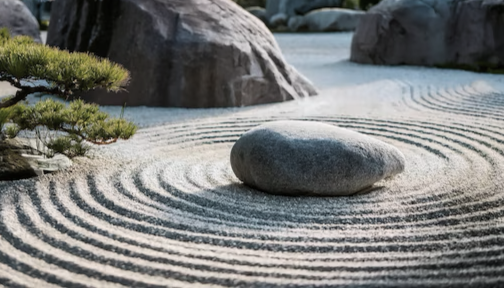
My Japanese background adds another layer: repetition, precision, quiet obsession with detail. Living in London gives me freedom to place this work in a contemporary context. Eyewear needs both. It is unforgiving in its tolerances, but it must feel calm on the face.
Kintsugi and the question of time
One question followed me from hairstyling into craft. How can I put time into something that does not immediately vanish.
The composite I use answers part of that. It is strong enough to last for decades. It develops patina, softening edges and deepening tone. It records touch.
The final piece arrived when I began thinking about kintsugi, the Japanese practice of repairing broken ceramics with lacquer and precious metal. Kintsugi does not hide damage. It honours it. The repair becomes a visible record of events.
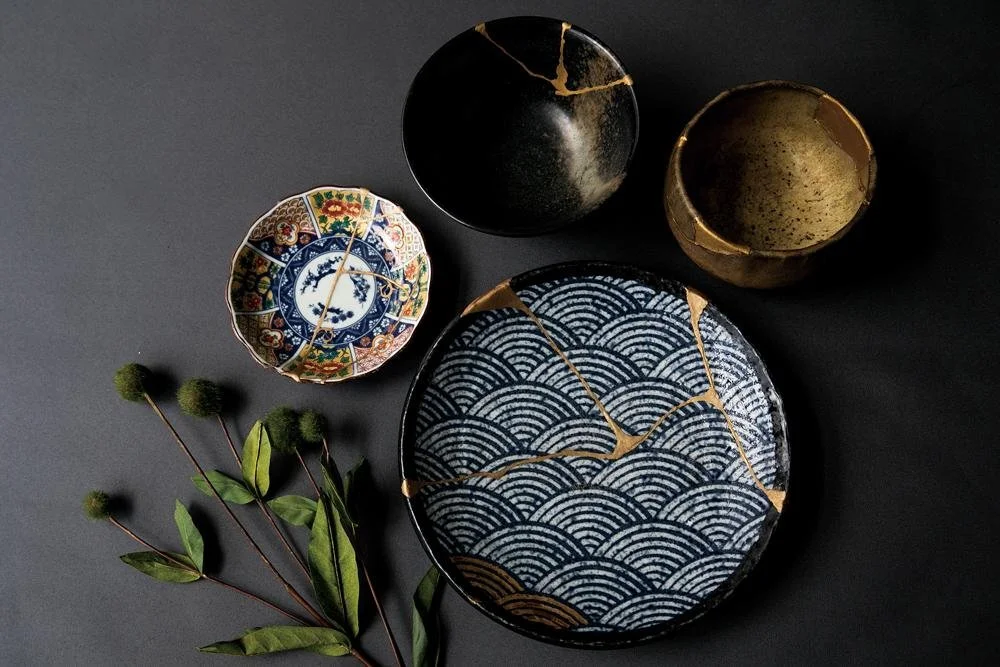
Applied to eyewear, kintsugi is both mindset and method. If a frame is damaged, the first instinct is to repair it in a way that respects the material and marks the moment, rather than replacing it and erasing its history. The frame becomes a timeline of its owner’s life.
All paths led here
Nothing was wasted.
Years of hairstyling technique and face analysis.
Working with top fashion creatives under pressure and time.
Countless failed prototypes and small victories in product making.
Conversations at street markets with strangers, collectors and other makers.
Growing up Japanese, carrying a quiet obsession with precision and care.
All of it comes together now in eyewear.
The frames are where everything I have learned meets in one place: how to frame a face, how a material should feel in the hand and against the skin, how an object can earn the right to stay in someone’s life for a long time.
This is why I am ready to let 3RD/DIADEM reach its final winter and give myself fully to eyewear. It is not a new beginning, but the point where every fragment of my past work finally aligns in one clear form.

The second chapter
If you would like to follow the second chapter of this work, you can find it here:
Instagram: @TANAKA_eyewear
Website: www.tanaka-eyes.com
3RD/DIADEM will quietly come to an end in the next few months, but the ideas, techniques and stories will continue inside TANAKA Eyewear.